
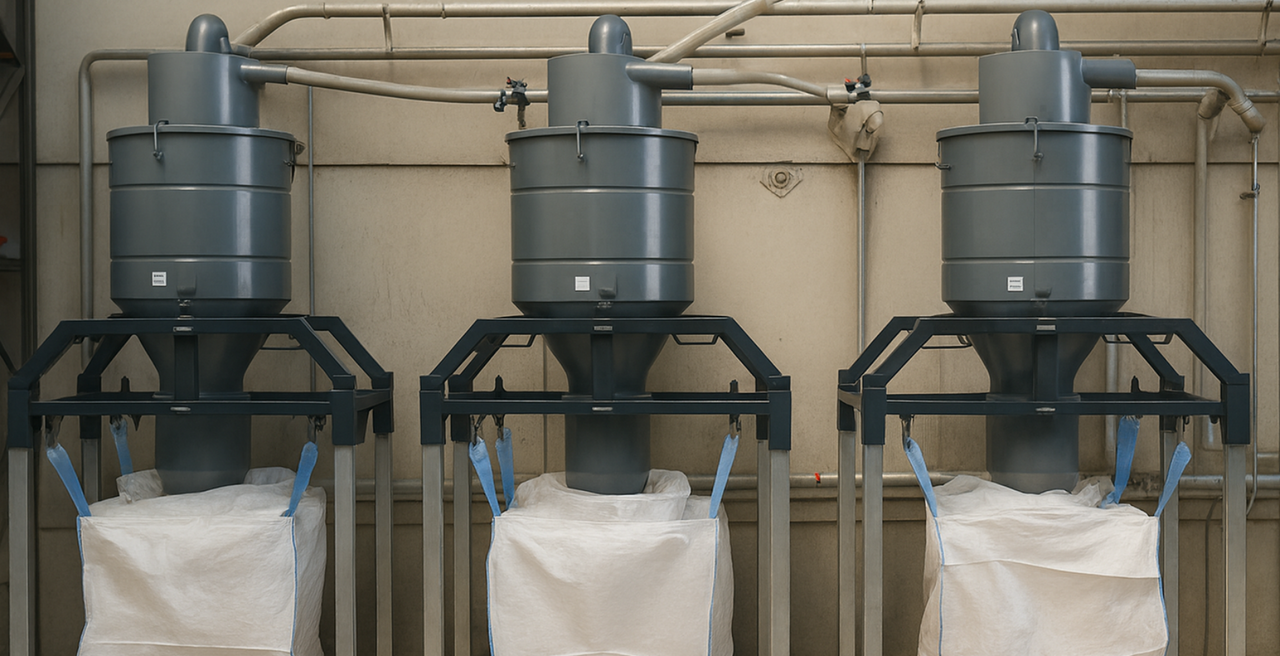
Why choose centralized vacuum systems for industrial dust management?
In many industrial departments, dust management is addressed with mobile vacuum cleaners or point solutions. This approach can be effective for localized interventions, occasional activities, or limited areas. However, as the production process grows, the need for extraction also changes.
The number of points to be serviced increases, distances become longer, more operators work simultaneously, and the vacuumed material must be collected, disposed of, or recovered in a more organized manner. In these cases, continuing to manage dust solely with mobile solutions can make operations less efficient and more complex to control.
Choosing centralized vacuum systems means moving from specific dust management to integrated process management . The system connects multiple workstations through a fixed network of pipes and conveys the vacuumed material to a collection point, helping to keep departments tidier and simplifying daily activities.
What is a central vacuum system and how does it work?
A centralized vacuum system is designed to serve multiple collection points within the same facility. Unlike a mobile solution, it doesn't operate in a single area, but is configured to integrate with the production layout and the department's operational needs .
The system may include a central vacuum unit, a filter unit, piping, an automatic control panel, sensors, and exhaust systems. Each component performs a specific function: the central vacuum unit generates the necessary vacuum, the filter unit separates dust from the air, piping connects the suction points, and collection systems allow for more orderly management of the vacuumed material.
The system's configuration depends on several factors: the number of stations to be served, the distance between extraction points, the type of material being extracted, concurrent use, discharge method, and installation constraints. Therefore, design is a crucial step. A centralized system should not be chosen solely based on the power of the central extraction unit, but must be sized considering the entire system.
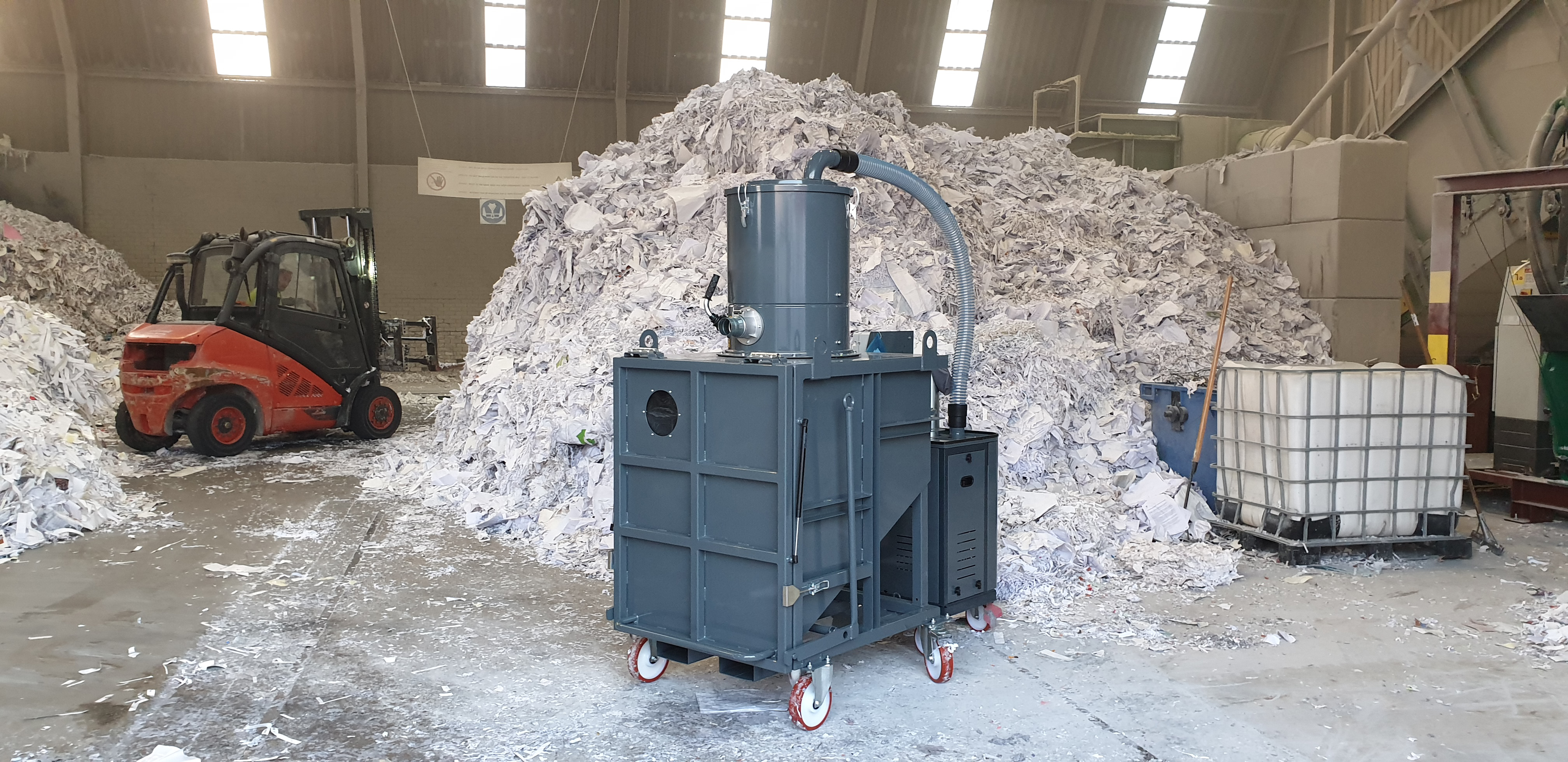
When to choose a centralized vacuum system
A centralized system is particularly suitable when a company needs to serve multiple extraction points in the same department or in different production areas. It is also useful when the distances to be covered are significant , when multiple operators need to vacuum simultaneously , or when the collected material needs to be conveyed to a single point.
This solution can also be considered in contexts where the presence of dust and residues impacts order, cleanliness, maintenance, and operational continuity. The accumulation of material on machinery, surfaces, or passageways can complicate daily operations and require frequent interventions. In some sectors, dust management is particularly important for product quality and workplace safety. Fine dust, processing residues, production waste, or potentially critical materials must be intercepted and managed consistently with the process.
In these cases, vacuuming cannot be considered just a cleaning activity, but becomes part of the production organization.
The advantages of centralized vacuum systems
One of the main advantages of centralized vacuum systems is department organization. Connecting multiple vacuum points to a single system reduces material dispersion and simplifies collection. The vacuumed material is conveyed to a specific point, facilitating disposal or recovery operations.
A second advantage concerns operational continuity . In departments where dust is constantly generated, having an integrated system can help maintain a tidier work environment and reduce repeated manual interventions. This allows operators to work in more controlled conditions and the department to manage extraction more consistently with production rates.
Another important aspect is integration with the production process. Centralized vacuum systems can be designed based on the factory layout, machinery location, dust generation points, and operator usage requirements. This way, vacuuming is not an external element to the process, but rather an integral part of the production system.
Centralized management can also facilitate activity control. A structured system allows for better organization of extraction points, definition of material collection methods, and provision of components suited to operating conditions. Where necessary, the system can integrate automatic control panels, sensors, and unloading systems designed to simplify daily management.
Why trust Delfin?
The choice of a centralized extraction system doesn't start with the product, but with a process analysis. Each facility has different needs and requires a specific technical assessment . To design an effective solution, it's necessary to consider air flow, pressure drops, pipe length, number of collection points, characteristics of the extracted material, and collection methods.
In the presence of specific dusts or complex application contexts, additional safety and compliance assessments may be necessary. Therefore, it's important to rely on a partner capable of analyzing the application as a whole, avoiding off-the-shelf solutions where a custom configuration is required.
Delfin supports industries throughout all project phases: from needs analysis to system design, right up to the definition of the most suitable components for the application context. The goal is to develop industrial extraction systems that are consistent with the production process, reliable in day-to-day operation, and sized for real-world conditions.
Request a technical evaluation for your system
Each department has specific characteristics. Therefore, a centralized system must be configured based on the actual context of use, not just the immediate need. Evaluating the number of extraction points, distances, material to be treated, and operating modes in advance allows for the design of a system best suited to the facility's needs.
If your facility has multiple extraction points , significant distances to cover , or increasingly complex dust management , it's time to evaluate a centralized solution.
Contact the Delfin team and request a technical assessment for your central vacuum system.