
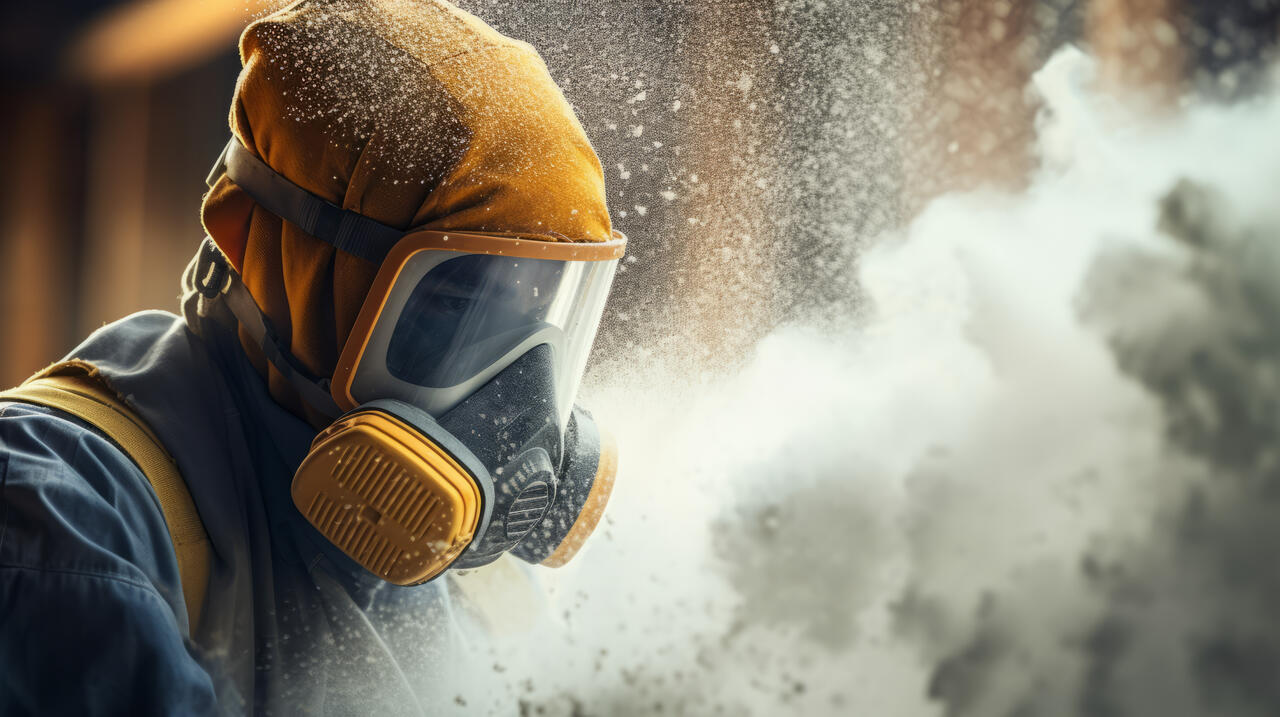
The new INAIL Technical Guide on hazardous dusts brings a key issue for industrial safety to the forefront: the correct management of dust-related risks in the workplace.
Developed by INAIL and CONFIMI Industria, with the contribution of AFIDAMP-FINCO, the guide focuses on prevention, regulatory compliance, corporate responsibility and air quality in production environments.
Why the new INAIL Technical Guide is a reference for industry?
The guide was created to clarify an increasingly complex regulatory framework, including Italian Legislative Decree 81/08, European and international technical standards, and the developments introduced by the new Machinery Regulation.
It is not just a technical document it is an operational and cultural reference for companies that need to manage hazardous dusts in a structured way throughout their production processes.
It helps companies interpret more coherently the obligations, technical measures and responsibilities connected with the presence of hazardous dusts in their facilities, directly connecting dust management with the prevention of occupational diseases, contamination, fires, explosions, accidents, and the civil and criminal liability of the employer.
What facilities need to assess today?
The publication encourages companies to carefully assess their plants, extraction systems and dust management methods. This is not only a matter of regulatory compliance, but also of preventing real risks for people, working environments and production.
Each facility should consider whether the measures currently adopted are adequate in relation to today's regulatory requirements and this obligation also involves manufacturers of industrial machinery, who are increasingly required to address dust management during the design phase and as part of risk assessment.
The risks of hazardous dusts for health, environments and operational continuity
Toxic dusts can compromise workers' health, contaminate working environments and create critical issues throughout the entire production process.
Their presence can increase worker exposure, reduce the level of control over working environments, and is associated with fires, explosions, injuries and issues that can affect safety and production continuity.
For this reason, their management must be considered a technical and organizational priority, not simply an additional intervention.
The sectors most affected
According to INAIL analysis, the construction, agri-food, wood and metalworking sectors account for more than 90% of incidents.
This figure highlights a strong concentration of risk, but it does not limit the issue to only a few sectors all industries are called upon to assess their plants and processes.
Why extraction alone is no longer enough?
Managing hazardous dusts requires more than simple extraction. It calls for an integrated technical approach that connects capture, containment, removal and filtration to the actual risk present in the facility.
Extraction and filtration must work together with the organization of work and the plant layout in order to improve safety, efficiency and compliance.
Delfin as a solution provider for dust management
From industrial vacuum cleaners to centralized systems, from integrated solutions to source capture, Delfin supports companies in the complete management of industrial dusts.
The range includes ATEX-certified solutions, L, M, H/HEPA classified systems, and OEB or MOCA solutions, designed to meet different application needs.
Delfin also actively contributed, through the AFIDAMP focus team, to the definition of the INAIL guidelines reinforcing a central principle: dust management is a strategic issue for risk reduction, production efficiency and air quality in the workplace.
FAQ
What is the new INAIL Technical Guide on hazardous dusts?
A document developed by INAIL and CONFIMI Industria, with the contribution of AFIDAMP-FINCO, to clarify the regulatory and technical framework relating to the management of hazardous dusts in the workplace.
Does my facility need to assess plants and processes for dust management?
Yes. The guide highlights the need for companies to assess plants and production processes in light of the regulations and technical measures currently required.
Which solutions can help manage toxic dusts?
Solutions may include source capture, industrial extraction systems, air filtration, containment and dust removal, with an integrated approach based on the actual risk.
The new INAIL Technical Guide on hazardous dusts confirms that dust management is now a priority for every industrial company aiming to improve safety, compliance and operational efficiency.
Properly assessing plants, processes and capture systems is the first step toward reducing risk and adopting solutions that are more consistent with the needs of the facility.
Contact us for a specialized consultation on hazardous dust management and to identify the most suitable solution for your production environment.
A document developed by INAIL and CONFIMI Industria, with the contribution of AFIDAMP-FINCO, to clarify the regulatory and technical framework relating to the management of hazardous dusts in the workplace.
Yes. The guide highlights the need for companies to assess plants and production processes in light of the regulations and technical measures currently required.
Solutions may include source capture, industrial extraction systems, air filtration, containment and dust removal, with an integrated approach based on the actual risk.